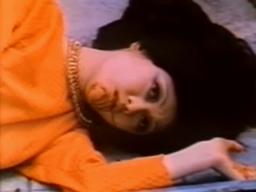
|
MARI HONJO
FACTS:
• Born
July 2, 1948 in Yokohama, Japan, to Teruo Honjo and Takako
Kinoshita. One brother (now deceased), one sister.
• Often uses the name and social security number of
her younger sister, MAYUMI HONJO, born September 17, 1950.
• Married Larry D. Myers in San Francisco, California
on July 3, 1972; divorced November 6, 1981.
• She still often uses the names MARI HONJO MYERS, MARI H.
MYERS, or MAYUMI MYERS.
• Married to Gary R.
Warren in Los Angeles, California on January 28, 1982; divorced
February 10, 1989.
• In the late 1980s
operated a men’s clothing store called "Otoko" (the Japanese word
for "man") at 407 N. Bedford Drive, Beverly Hills, CA 90210.
Her business partner was infamous video pirate Lisa T. Yamamoto, aka Lisa Gage. (Lisa
reports no recent contact.)
• In the past
has used these mail drop addresses, although each proprietor states
they have not seen her in five years:
270 N. Canon Drive #1972, Beverly Hills,
CA 90210 (Beverly Hills Postal Center Inc., proprietor; Leonard Stein,
registered agent, Gerald Zack, president)
2155 Kalakaua Av. #418, Honolulu, HI 96815
(Michiyo Kamijo, proprietor)
• Other former addresses include:
1136 Larrabee #424,
West Hollywood, CA 90069
1320 Miller #4, Los
Angeles, CA 90069
930 N. Doheny Dr., West Hollywood,
CA 90069
300 Wai Nani Way #917, Honolulu, HI
96815
330 N. Crescent Drive #108, Beverly Hills, CA
90210
311 S. Robertson Blvd. #404, Beverly Hills, CA
90211 (no such address; however, there is a mail drop at 311 N.
Robertson Blvd.)
141 N. Linden Dr., Beverly Hills,
CA 90212
• May
have worked for:
Fred Hayman Beverly Hills exclusive fashion boutique,
190 N. Canon Dr., Beverly Hills, CA 90210 (They report she has not
been employed there.).
•
Last confirmed physical address:
2102 Century Park
Lane #105, Los Angeles, California. (She does not live there
now, and has not lived there since July, 1997. The current
resident has no knowledge of her whereabouts.)
•
May have resided recently at:
2360 Melville
Drive, San Marino, CA 91108 (Owners speak little English; owners'
daughter reports no knowledge of her.)
FACT OR
FICTION?
As creative as she is beautiful, MARI HONJO has claimed these among
her many startling life adventures:
• Was married to
the late rock star Cozy Powell. (Powell’s biographer states he
has never heard about it.)
•
Studied acting with Lee Strasberg at the renowned Actors Studio
in New York.
•
Appeared in a TV commercial for Karl’s Shoes, which consisted
almost entirely of her sitting on the floor, giggling. (We think
this one might be true.)
•
Original choice for the role of "Mariko" (Lady Toda Buntaro)
in the 1980 TV mini-series Shogun, the part later going to Yoko Shimada.
• Also starred in Especially During A Storm (1975), a 35-minute short drama filmed in San Francisco.
(Long rumored but never seen, details recently surfaced on IMDB proving this one is true.)
MOST
RECENT MARI HONJO SIGHTINGS:
•
The name Mari Honjo appears on
the British Norfolk Education and Action for Development (NEAD) website as one of two instructors in Chinese cultural
activities. Grace Po-Ting Fang, the other instructor, reports
she does not know this lady and doesn’t remember anyone fitting her
description. (Subsequent investigation determined this was a different Mari Honjo.)
• A Japanese lady
named Tomo had a website with several pages devoted to
her love of herbal tea products and sale promotions for various Chanel
brand handbags.
On one page Tomo reported a meeting
with "Miss Mari" at a pizza
parlor in a shopping mall in Hawaii, where she was introduced to the
wonders of herbal tea.
Another page promoted a
"Winter Fashion Show 2002" for ¥5,000
(±US$40) at the Teikoku (Imperial) Hotel Osaka, featuring Mari Honjo Myers. Our
Japanese is not very good (our sensei says not to tell anyone we were
her student), so we have relied on a web-based translation of portions of
that page, below.
Tomo claims no current ability
to communicate with Mari Honjo,
nor any knowledge of her present whereabouts. As soon as contact was
made with Tomo, her website deleted all reference to "Miss
Mari" or Mari Honjo.
[Bad translation of
Japanese language info formerly on Tomo's website:]
Winter Fashion Show 2002
with Ms. Mari Honjo
Myers
The
great collection has also gathered this time. The lecture and school
of Miss Mari are also full of precious
contents. The view to a fashion may also change. When uniting also
invites a friend, please surely come.
...
Contents Precious story of personal experiences in the fashion
community for 30 years of Miss Mari.
The history and the present condition of a present age Europe
fashion. In addition, fitting meeting & fashion consulting,
exercise, a makeup, etc
Collections of the very
first rank, such as CHANEL. Giorgio Armani. Valentino. Gianni
Versace. Moschino. Ungaro. Gianfranco Ferre. Gucci. YSL. Escada.
Karl Lagerfeld. Christian Lacroix. Hermes, gather. A designer is the
one-point thing completed for the Europe Imperial Household or the
Hollywood star directly.
Profile Mari Honjo Myers fashion consultant
It is born 1948.7.2, and is pure 浜っ子. Living in Beverly Hills. They are
a visit to America and abnormal psychology speciality to New York
because of 1967.9 studying abroad after the Yokohama joint
establishment school graduation. The under-exclusive-contract model
of Valentino is chosen during enrollment in school, and it plays an
active part in Europe and the United States as a model. From the
second half of 1980, it will result activity and now as fashion
consultants, such as Vogue, the Hollywood movie, the Hollywood star,
and an Imperial-Household-sponsored fashion show of Europe. A
volunteer activity and a lecture are made into a lifework, as part
of charity activity, she ages 1994 for the purpose of raising young
men's international nature and independency of Japan through a
fashion, and visits Japan frequently for it, and sponsorship of a
fashion show etc. is worked for it.
...Since I sold out in the last show, please understand
the maximum article of a photograph. |
|
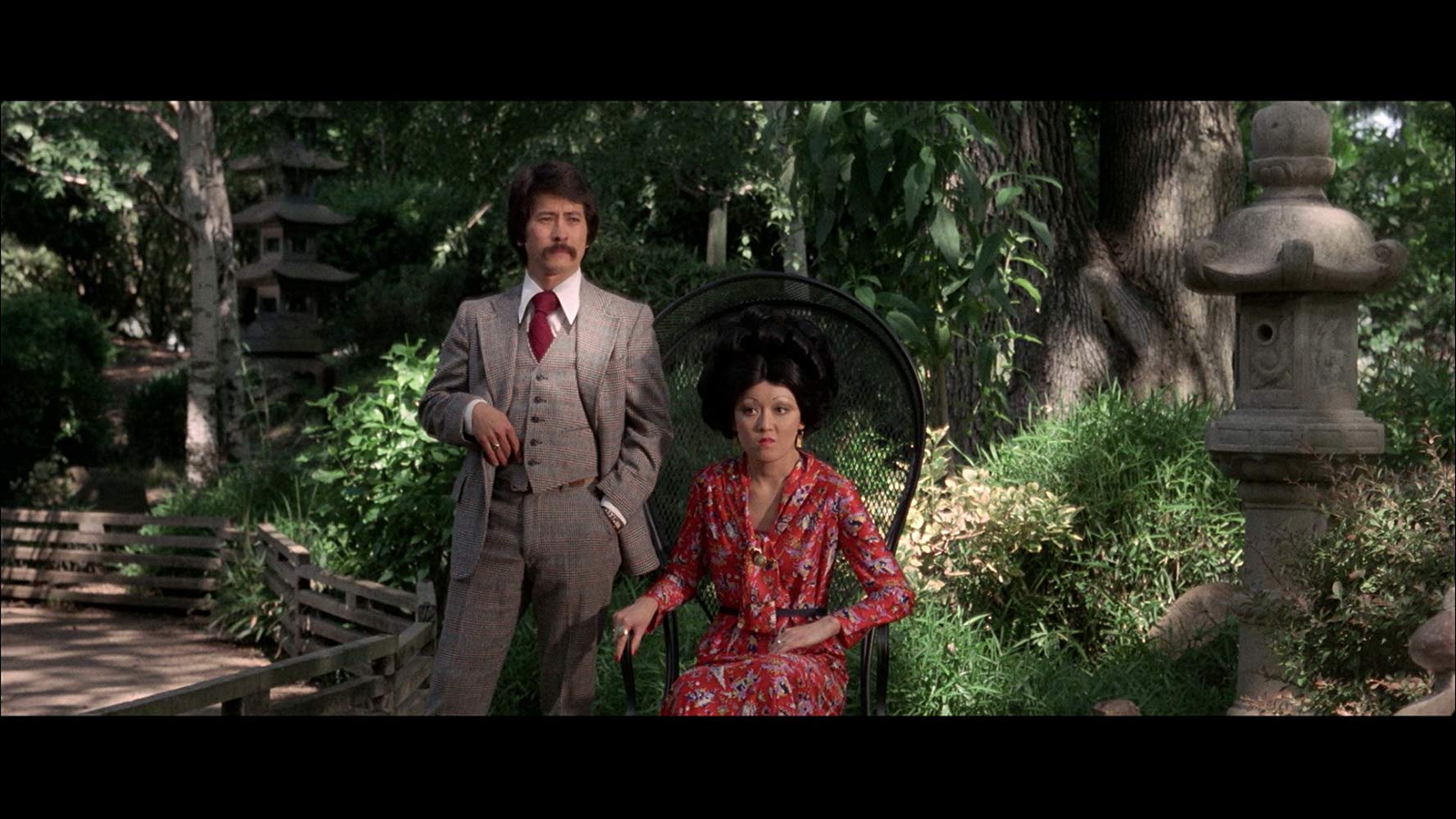
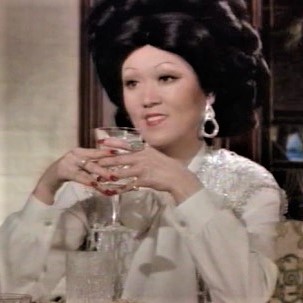 |
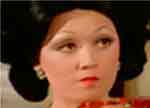
MARI HONJO in her
starring role as the evil Madame Lee in the 1976 kung fu classic Death Machines
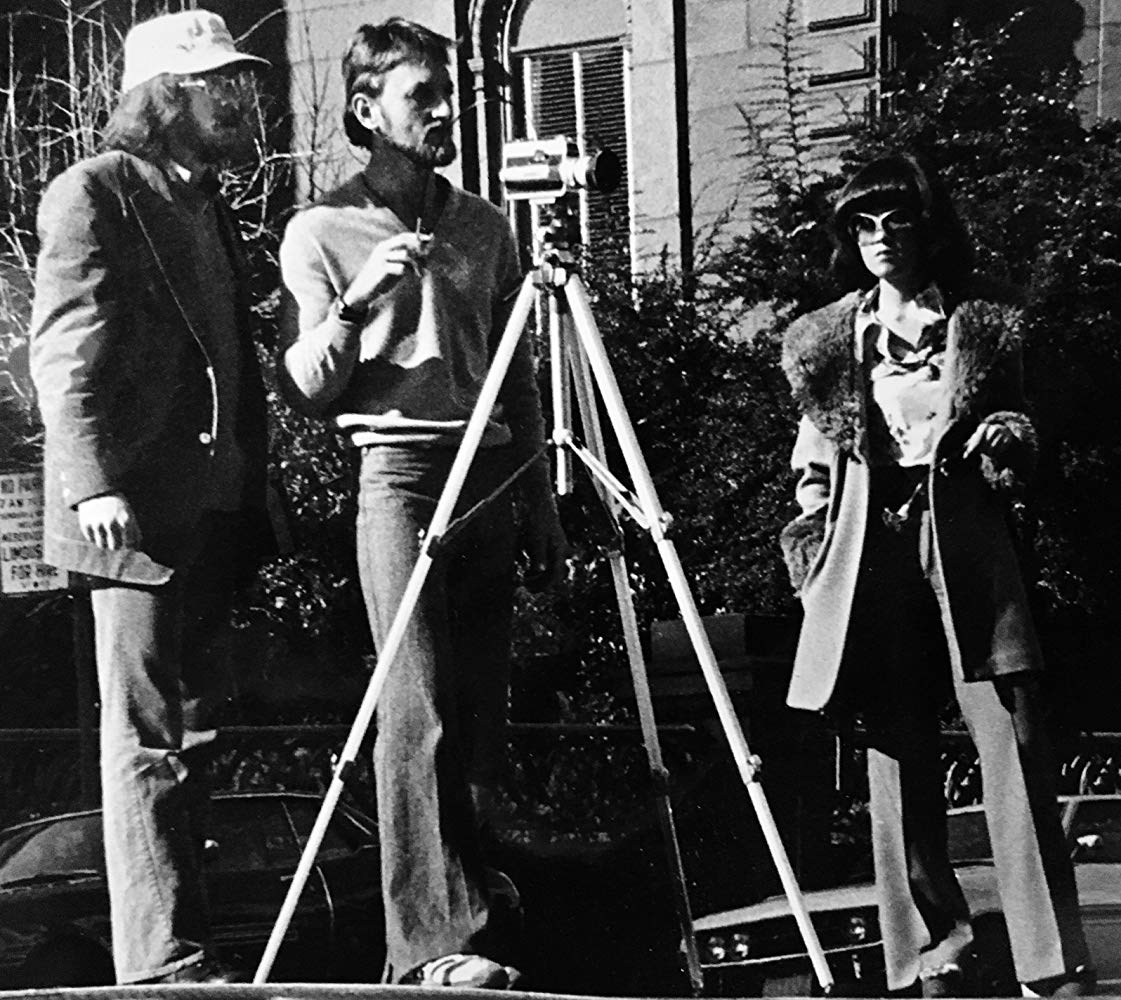 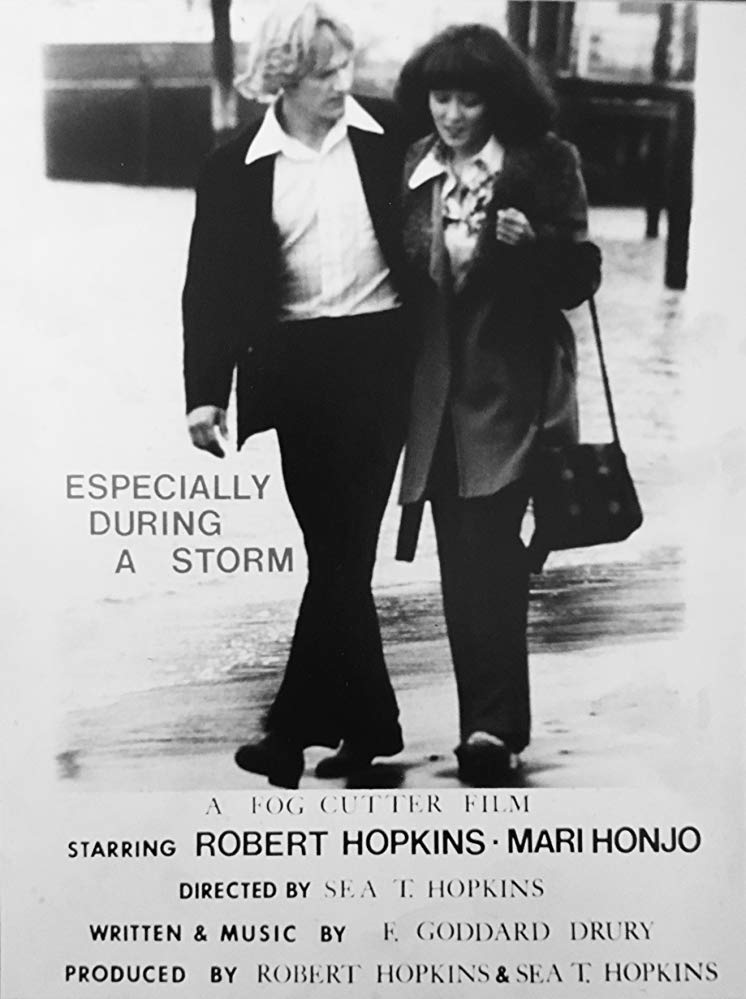
MARI HONJO also appeared as "the mysterious Asian woman" in the 1975 short Especially During A Storm
|
If you have
information on the current whereabouts of
MARI HONJO,
please email
us
in confidence with details. |
PRESS CLIPPINGS
From the Press Book
for the 1976 Crown International Pictures release Death Machines:
Mari Honjo
Chilling in "Death Machines"
There
may be a trio of deadly killers in Crown International’s release
"Death Machines," but for sheer evil Madame Lee, role played by
Yokohama-born Mari Honjo is easily the
most sinister.
Miss Honjo’s previous theatrical experience was
on the legitimate stage and also she is well known as a model mainly
in the Miami (Florida) area, in this country. In Japan the black
haired actress appeared as a fashion model in most of that country’s main
department stores. She studied acting at Hunter College and
after that got acting and singing experience at New York’s Showcase
Theatre.
Starring in "Death
Machines" are Ron Marchini, Michael Chong and Joshua Johnson in a
story co-authored by Joe Walders and director Paul Kyriazi. Don
Rust was cinematographer on the film which was made in central and
northern California.
MORE PRESS
CLIPPINGS
By Linda Gross in the Los
Angeles Times, May 21, 1976:
Killing on Cue in "Death
Machines"
"Death Machines" (citywide)
is lifeless—but a diverting and modest cartoon kind of kung fu flick
in which the city of Stockton and a maimed karate school student try
to outwit a trio of mechanical executioners.
A lacquered-haired and lisping dragon lady
(Mari Honjo) mysteriously trains
three men, Ron Marchini, Joshua Johnson and Michael Chong, to become
inhuman-human robots who kill on cue.
Then,
Miss Honjo invites the local Mafia
chief (Chuck Kizakian) to dine and for des[s]ert serves him the head
of one of his henchmen, advising: "If you want someone killed in this
city, deal with me."
The death team
then launches a series of Mafia-backed assignments, always sending
their prospective victim a red [B]uddha as a calling
card. They bust up the local karate school—killing everyone
except for an eyewitness whose arm is severed (John Lowe).
Policemen (Ron Ackerman and Edward Blair) block a
second try at Lowe’s life and capture one-third of the
team—Marchini. But the policemen are taken off the case due to
remiss reports and bad attendance at police public relations
classes. Marchini escapes from their replacement, shreds up the
police department, and rejoins his partners to snarl and splatter blood
until all their murders are accomplished.
At its best, Joe Walders and Paul Kyriazi’s straying script—the idea of
men turned into murderers by society—is an interesting concept.
At its worst, the automatons are devoid of any motivational or
emotional fleshing and are only provided with movement and grunting
noises.
Director Kyriazi captures a dusty,
petty ambience. The best sequence is when part of the death
machine (Marchini) takes refuge in a café owned by a God-fearing old
couple.
|
|
LINKS
 • Enjoy Paul Kyriazi's entertaining Live the James Bond Lifestyle website. Kyriazi directed Mari Honjo in the kung fu epic Death Machines. • Enjoy Paul Kyriazi's entertaining Live the James Bond Lifestyle website. Kyriazi directed Mari Honjo in the kung fu epic Death Machines.
• Death Machines
starring Mari Honjo now available on DVD.
Where is
MARI
HONJO?
Click
here if you know. |
|